
What 10,000+ Orders Reveal About Custom Shirts & Merch Trends in 2026
TL;DR
- Screen printing is still the default for campus merch because it stays affordable and looks crisp on big orders.
- Fresh Prints saw embroidery climb for elevated staples like fleece sweatshirts, tees, and hats.
- Students want built-in garment details like stripes and contrast linings instead of piling on rhinestones or extra add-ons.
- When Fresh Prints reviews trends, classic designs stay strong while grunge and handdrawn styles are becoming more popular.
- Wellness culture is pushing sporty basics like striped tees, fold-over bottoms, and more into people's merch collections.
You can feel when campus style starts to shift. It’s subtle at first…then it seems like so many trends are coming at you all at once.
Next thing you know, everyone’s picked up on the newest layering piece, the trendiest colors of the season, and the next best essential for a great wardrobe capsule. These style shifts apply to custom shirts and merch too.
Especially in Greek life, what you wear isn’t just an outfit. It’s belonging. It’s reputation. And it’s social currency. So we reviewed 10,000+ custom apparel orders and proofs, across 500+ schools, from July 2025 to February 2026, to explain all the ways merch creation and styling is shifting.
Here’s what’s actually showing up in the data we got, and what it means for your next merch drop.
Screen Printing Still Runs Campus
If you’re wondering what print type dominates custom merch, it’s screen printing.
Roughly 70% of orders used screen printing. This isn’t a new spike or groundbreaking information. Screen printing has been the go-to for many sororities, frats, and student orgs because it makes the most sense:
- It scales for big orders without pushing costs unnecessarily
- It works across tees, hoodies, and sweat sets
- It’s consistent, readable, and durable for all sorts of graphics and design styles
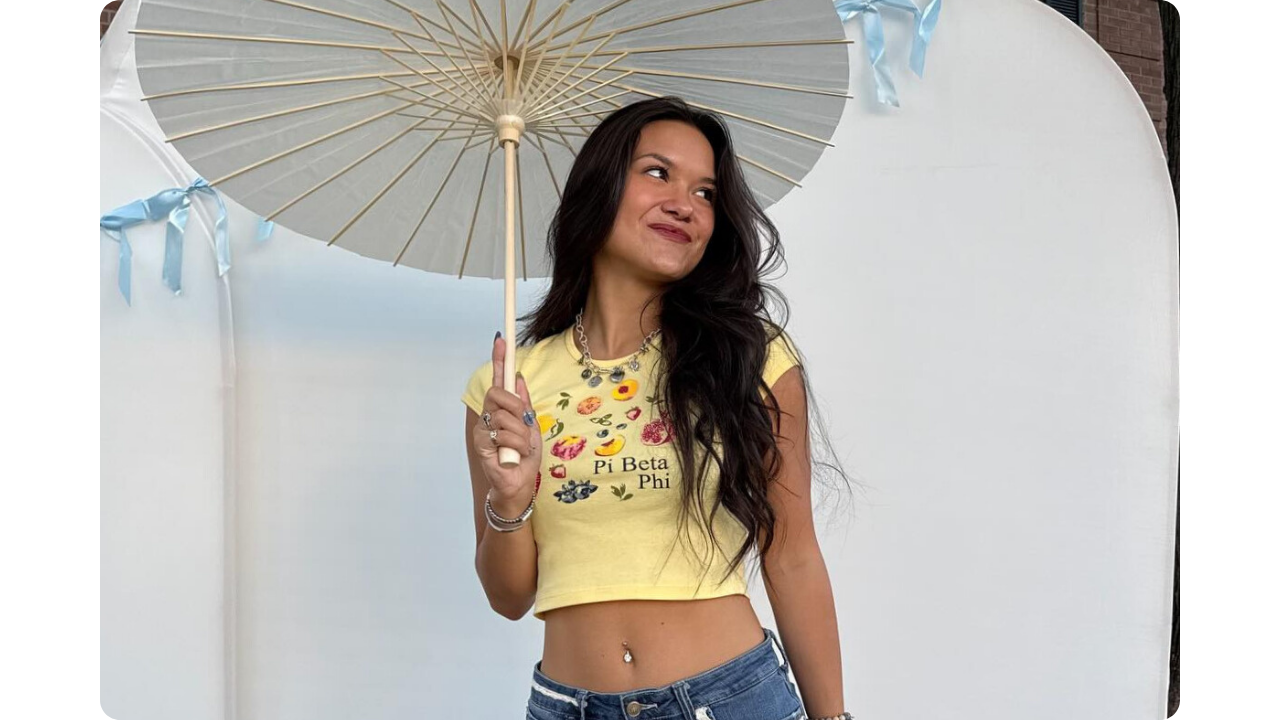
Embroidery follows right after, accounting for almost 20% of orders. But the energy there is different.
People choose embroidery specifically for items like fleece sweatshirts, structured shirts, and hats. And I don’t think that’s a coincidence. These are the apparel products that already feel more elevated the second you put them on. Embroidery just complements that better. The stitched finish feels more permanent, less likely to get ruined (if you wash your clothes the right way, that is).
Embroidery shows up most on products people already see as long-term staples. It matches the mindset behind the piece.
Built-In Details Are Replacing Add-Ons
If there’s one shift that’s impossible to ignore, it’s this: students are preferring custom apparel that has details that look like they were already part of the original garment, not just added or pressed on after printing the design.
For example, rhinestones and studs were pretty popular in early 2025. But now, chapters and student orgs are leaning into:
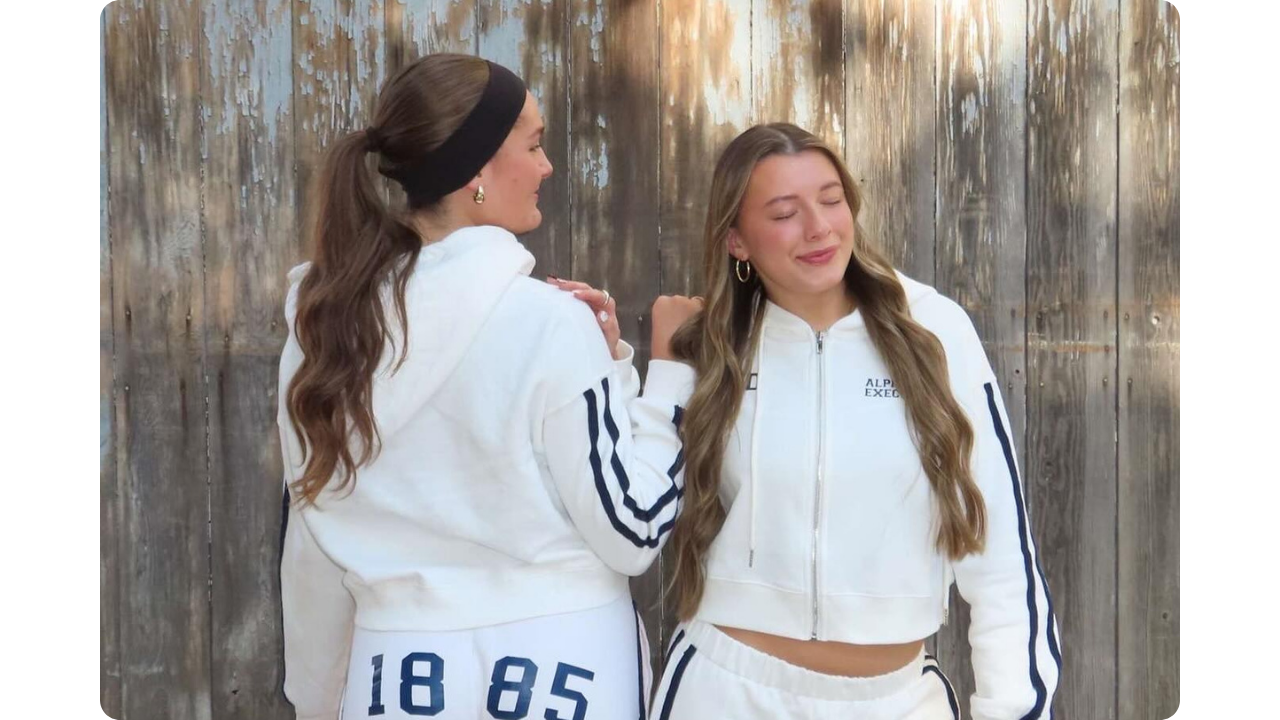
- Garments with patterns like stripes and polka dots
- Hood stitch detailing
- Inner hood lining contrasts
The difference is subtle but important. If a detail looks like it belongs on the original garment, it’s perceived as more fashionable.
There’s also a small shift in personalization. Highly specific personalization like custom names or numbers on merch, is trending down slightly. Of course we know that Spring simply has fewer game days compared to fall, which naturally impacts how often custom names and numbers for game day merch are ordered.
But zooming out, the direction is clear: “customization” doesn’t mean piling more onto a blank anymore. It means designing merch and choosing garments that have more character.
Design Styles on the Rise (And on the Way Out)
Some style lanes are softening:
- Y2K is starting to dip.
- Minimalist is easing slightly.
- 80s & 90s nostalgia is seeing the sharpest decline.
None of these aesthetics are completely gone. They’re just not dominating the way they used to.
At the same time, classic designs still hold the top spot overall. And why wouldn’t they? Classic is one of the most dependable design styles out there. The designs are big and colorful enough to get noticed. But they can look like something your chapter could’ve worn five years ago, and could still wear five years from now. And here’s where it gets interesting…
Students are also becoming interested in more expressive styles like Grunge and Handdrawn designs, both showing upward movement.
That doesn’t mean everyone is going to abandon that classic style (I honestly think we never will). But it shows how merch does two jobs at once.
On one hand, it represents the collective: the chapter, the org, the event. That’s where classic design thrives. It feels unified. Recognizable. Cohesive.
On the other hand, students are still individuals. They want something that aligns with how they personally dress - whether that leans a little edgier (grunge) or more playful and illustrated (handdrawn). Expressive styles can still give them that sense of personality without losing the sense of belongingness in a group.
And that’s why this shift is so important. In 2026, students won’t simply be choosing one style over the other. But they’ll always choose what feels most like them, all while still representing something bigger than themselves.
Sports & Wellness Is Redefining "Everyday Merch"
Three out of the top four most popular product styles fall under "active lifestyle" categories:
That’s not random. Campus culture (and even society as a whole) right now is deeply into movement. But not just in a gym rat kind of way. It’s hot yoga or sculpt before class. Pickleball tournaments that turn into social events. Run clubs. Hiking on Sunday. Trying new workout & artsy classes just because. The rise of “side quests” isn’t a joke. People genuinely want fuller, more interesting lives (ngl I wish I realized this way sooner too).
And what you wear signals that.
Active-inspired merch doesn’t just say, “I work out.” It says, “I have things going on,” “I have a life,” “I’m not boring.” It subtly communicates that you’re social, involved, and doing more than just sitting at a desk. There’s a lifestyle attached to it.
That’s why chapters are leaning into:
These pieces fit into the version of college life students are curating for themselves. You can wear them to class, to a workout, or even to a spontaneous plan after dinner.
Physical and mental wellness are part of this, yes. But so is the social boost. Looking like someone who has hobbies. Looking like someone who says yes to plans. Looking like someone who’s building a life. If campus culture is expanding beyond the “get good grades, graduate, work a high-paying job” mindset, merch is reflecting that too.
So What Does This Mean for Your Next Merch Order?
If you strip away the percentages and trend labels, here’s what 2026 merch is really about:
1. Start With the Garment, Not Just the Graphic
More chapters are choosing blanks that already feel interesting-striped tees, hoodies with contrast hood linings, textured fabrics, structured silhouettes.
Instead of asking, “How much can we add to this?” ask, “Is this base strong on its own?”
If the garment already has personality, your design doesn’t have to scream to be noticed.
2. Leave Room for Self-Expression
Classic designs still work. They’re dependable. They unify the group.
But students also want pieces that align with how they personally dress. When you’re designing, think:
- Could someone style this with their everyday wardrobe?
- Does it feel like something they’d pick themselves?
- And better yet, ask your members directly what they’d want on the next set of custom apparel!
Merch does two jobs: representing the chapter and fitting into someone’s individual aesthetic. The best drops respect both.
3. Design for Real Life, Not Just the Event
Activewear isn’t a fad. Students are building fuller schedules and fuller identities—workout classes, side quests, spontaneous plans.
That means they also prefer merch that can move with their lifestyle. If it only works on the official event day, it won’t last. And if you’re ever stuck, come back to this one question:
Would members wear this on a random day?
Not because the exec board told them to.
Not because it’s mandatory.
But they genuinely like it and it fits their life.
That’s the merch standard in 2026.
Frequently Asked Questions
What does this merch data cover?
It’s based on 10,000+ custom apparel orders and proofs across 500+ schools from July 2025 to February 2026, so it reflects what college orgs actually ordered across a big range of campuses.
What’s the most common print type for custom merch?
Roughly 70% of orders used screen printing, mostly because it works well for large quantities and stays cost-effective for bulk orders.
What products are best for embroidery right now?
People use embroidery mostly for fleece sweatshirts, structured shirts, and hats.
What design styles are declining, and what’s rising?
Y2K is starting to dip, Minimalist is easing slightly, and 80s & 90s nostalgia is seeing the sharpest decline. Classic design styles still hold the top spot overall, but more expressive lanes like Grunge and Handdrawn are also moving up.
What product styles are most popular right now?
Three out of the top four most popular product styles fall under active categories: Sportswear, Athleisure, and Outdoorsy.
Conclusion
Beyond all the data, what matters most is that students want merch that feels like part of their identity (not just proof they attended something).
Greek life has always been about belonging. About shared experiences. About showing up in something that represents your people. The difference in 2026 is that students also want that representation to align with who they are outside the group: their hobbies, routines, and personal style.
The best merch now does both. Students aren’t chasing every aesthetic that pops up on their feed. They’re curating. They’re thinking about what lasts. What feels like them. And what still represents their org well.
When you’re ready to turn these insights into your org’s best shirts, hoodies, or sweat sets yet, we’ll be here to make it happen.